Expert Tennessee Probation Violation Lawyer: Protect Your Rights Today
Key Takeaways
A probation violation in Tennessee can result in serving your original sentence in jail or prison—you must act quickly to protect your freedom.
Nashville criminal defense attorney Ryan Terrell defends probation violations across Middle Tennessee, including Davidson, Rutherford, Williamson, Sumner, Wilson, and Robertson Counties.
Judges use a lower "preponderance of the evidence" standard at a probation violation hearing, making skilled legal representation critical.
Every probation violation case is different—an attorney can often reduce potential penalties, avoid revocation, or keep clients out of custody.
Call (615) 200-0449 or message us online for a confidential consultation about your situation.
Understanding Probation in Tennessee
Probation in Tennessee is court-ordered supervision allowing a person to serve part or all of a sentence in the community instead of jail or prison. Courts throughout Nashville (Davidson County) and surrounding counties routinely impose supervised probation on both misdemeanor and felony criminal cases. Probation is governed by a probation agreement, which is a binding contract outlining the terms and obligations the individual must follow.
Typical probation conditions, as set out in the probation agreement, include:
Reporting to a probation officer monthly or more frequently
Submitting to random drug and alcohol testing
Paying fines, court costs, and restitution
Completing treatment programs or community service
Avoiding new criminal charges
Staying within assigned counties without travel permission
Failing drug tests or committing a new crime are common ways individuals violate their probation agreement.
Your probation terms are set by the judge at sentencing and can vary widely depending on the criminal offense, your history, and local court practices in counties like Rutherford, Williamson, or Sumner. Failure to follow any written condition—even something that seems minor—can result in an arrest warrant and possible incarceration during your probation period.
In Tennessee, a probation violation occurs when an individual fails to meet any of the terms of their probation agreement, including missing appointments, failing drug tests, or committing new offenses. Probation violations in Tennessee are categorized as substantive violations (committing a new crime) or technical violations (non-criminal infractions such as missing appointments or failing drug tests), and technical violations can still result in significant penalties. Common examples of technical violations include failing to pay required fees, leaving the jurisdiction without permission, or not completing court-ordered programs.
Types of Probation Violations in Tennessee
Tennessee law recognizes both substantive and technical violations, and both can carry severe consequences.
Technical violations involve non-criminal infractions of probation terms, such as:
Missed probation meetings (approximately 35% of violation reports)
Failing drug tests or submitting diluted samples
Unpaid court costs or restitution
Curfew breaches
Travel outside Tennessee without permission
Incomplete classes or community service
Technical violations can still result in significant penalties, even though they do not involve new criminal conduct.
Substantive violations involve new criminal conduct while on probation, such as:
DUI arrest in Nashville TN
Domestic assault in Rutherford County
Drug possession in Williamson County
A 'new crime' is the most serious type of substantive violation and involves being caught committing an additional criminal act while on probation.
Some counties treat repeated technical violations almost as seriously as a new criminal offense when they show a pattern of non-compliance. The probation agreement outlines both technical and substantive violations, and understanding this distinction is crucial for defense strategy. A Tennessee probation violation lawyer like Ryan Terrell will identify whether your alleged violation is technical, substantive, or a combination—because that directly affects strategy and possible outcomes.
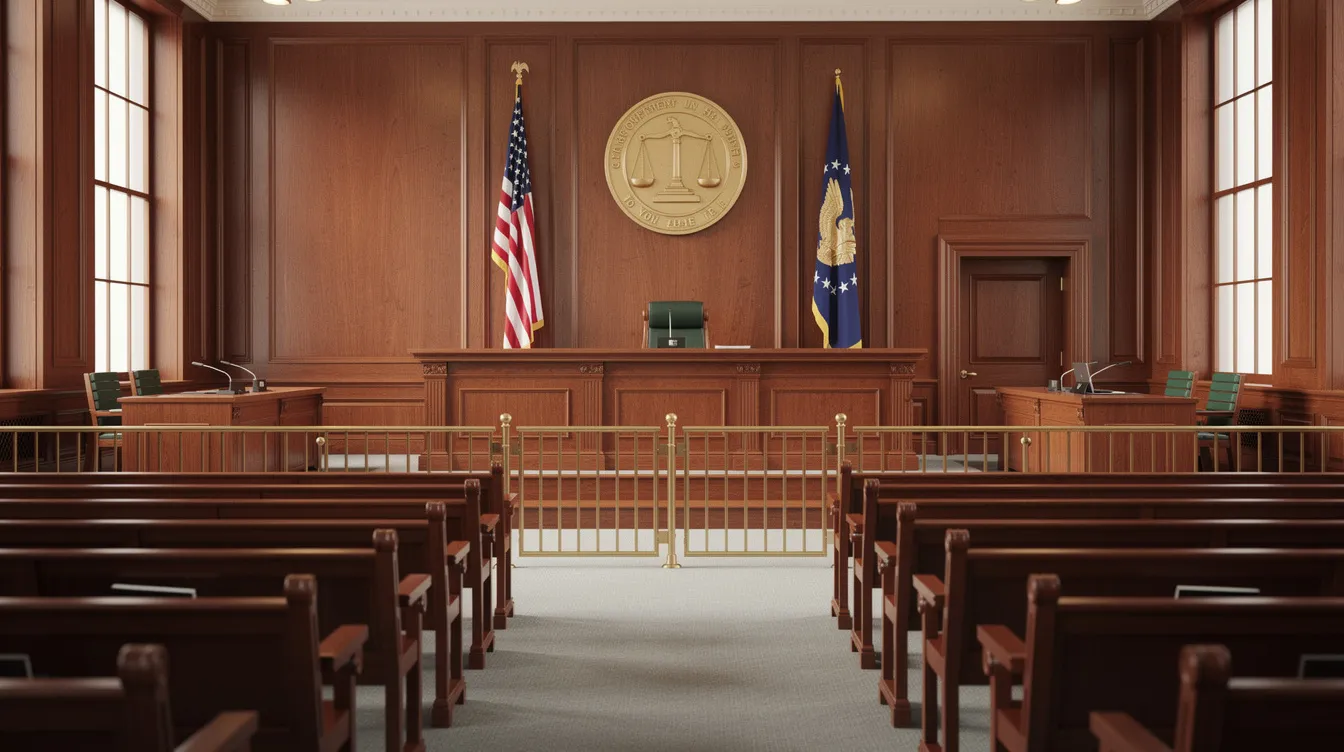
Consequences of a Probation Violation in Tennessee
When a violation occurred, the judge has wide discretion and can impose part or all of your original sentence. Potential consequences include:
Outcome |
Description |
|---|---|
Verbal warning |
Rare, typically under 10% for first offenses |
Modified conditions |
Increased reporting, added treatment, curfew |
Probation extension |
Can double the original probation period |
"Shock" jail time |
Short incarceration (days to months) |
Partial revocation |
Serving 20-50% of suspended time |
Full revocation |
Serving the entire original sentence |
For felonies, probation revocation can mean prison time in the Tennessee Department of Correction. Misdemeanor revocations often result in a jail sentence at facilities like Davidson County Jail.
Judges reviewing violations consider the original offense, prior record, compliance history, circumstances surrounding the violation, and evidence of rehabilitation. Because Tennessee uses a lower burden of proof at revocation hearings, negative outcomes are more likely without a criminal defense attorney.
What to Expect at a Tennessee Probation Violation Hearing
Probation violation proceedings differ significantly from jury trials. They're usually held before the judge who sentenced you or supervises your docket—not a jury.
The basic process works like this:
Probation officer files a violation report
Court issues a capias warrant or summons
You're arrested or surrender to court
A probation hearing is scheduled (often within 10-30 days)
At the hearing, the State must prove the violation by a "preponderance of the evidence"—meaning just 51% likelihood, not "beyond a reasonable doubt" like at a criminal trial. This lower burden tilts heavily against defendants.
An experienced Nashville defense lawyer can question witnesses (including your parole officer), present evidence of compliance, and argue for alternatives to revocation. In Davidson County and nearby courts, hearings move quickly—contact defense counsel immediately after learning of a warrant or violation notice.
How a Tennessee Probation Violation Lawyer Can Help
Hiring a probation violation attorney isn't legally required, but it's often the difference between walking out of court and going into custody. Data suggests revocation rates drop from 60-80% without counsel to 30-50% with legal representation.
Key defense steps include:
Reviewing your probation order and violation report for errors
Investigating allegations and gathering witness statements
Collecting records showing compliance (payment receipts, treatment logs, attendance sheets)
Challenging unreliable drug test results or administrative mistakes
Negotiating with prosecutors and probation officers for agreed resolutions
A lawyer can advocate for treatment-based solutions—substance abuse counseling or mental health services—instead of jail time, especially when violations stem from addiction or health issues.
If you think you may have violated probation, call (615) 200-0449 or message us online immediately.
Why Choose Ryan Terrell for a Probation Violation in Tennessee
Ryan Terrell is a Nashville-based criminal defense lawyer who regularly appears in courts throughout Middle Tennessee. His law office handles probation violation charges alongside his three key practice areas:
Criminal defense: Probation violations, DUI, assault, drug crimes, violent crimes
Civil litigation: Disputes involving employment, contracts, and more
Business law: Matters affecting professional licenses or financial restitution
Ryan represents clients in Metro Nashville (Davidson County) as well as Rutherford, Williamson, Sumner, Wilson, and Robertson Counties. He's familiar with local court practices, judges, and probation officers—knowledge that shapes individualized defense strategies rather than quick guilty pleas.
Contact Ryan at (615) 200-0449 or via the online contact form to discuss your probation violation case.

Common Probation Violations Seen in Nashville and Middle Tennessee
The same types of violations recur across Davidson, Rutherford, Williamson, Sumner, Wilson, and Robertson Counties:
Failed or diluted drug screens (approximately 40% of violations)
Missed probation meetings (about 25%)
Unpaid court costs or restitution (15-20%)
Leaving the county or state without permission
Positive alcohol tests for DUI probationers
New arrests for assault, theft, or drug possession
If you are facing a Nashville probation violation, it is crucial to seek legal advice from an experienced attorney who understands the complexities and potential consequences of these cases.
Traffic-related arrests—like driving on a revoked license—can also trigger Nashville probation violations on underlying criminal cases.
Example scenario: A Williamson County client facing probation violation charges for missed drug tests consults an attorney before their court date. The lawyer discovers lab errors, enrolls the client in treatment, and presents evidence of good faith compliance. The result: continued probation with modified conditions instead of 90 days in jail.
Early involvement gives clients a chance to fix paperwork issues, catch up on paying fines, or enroll in treatment programs before the hearing.
Steps to Take If You Think You Violated Probation
Don't ignore a possible violation or wait for an arrest. Taking action quickly can significantly improve outcomes in such a situation.
Immediate steps:
Stop further violations immediately
Gather documents: attendance sheets, payment receipts, treatment records
Create a detailed timeline of events
Avoid making detailed statements to probation officers or law enforcement before consulting an attorney
Contact a Tennessee probation violation lawyer to discuss self-surrender, bond options, or hearing preparation
Call (615) 200-0449 or send us a secure online message to get specific advice on your circumstances.
Connected Defense for Your Underlying Criminal Case
Probation violations rarely happen in isolation—they're often tied to the original crime or new criminal charges. Ryan Terrell defends a wide range of criminal cases in Tennessee, including:
Having one lawyer handle probation violations and your underlying case allows for a unified strategy and consistent advocacy before the same judge. Ryan's broader experience in civil litigation and business law also helps when probation conditions involve employment or professional licenses.
If you're facing both new charges and violating probation, seek representation that addresses all pending matters together.
Schedule a Consultation with a Tennessee Probation Violation Lawyer
A probation violation can change your life in a single court date, but informed, timely legal help can often protect your freedom and future. Ryan Terrell meets with clients in downtown Nashville and represents people across Middle Tennessee courts in probation violation and other criminal matters.
Your situation will be taken seriously and discussed one-on-one with an attorney in complete confidentiality.
Call (615) 200-0449 now for a confidential consultation or contact us online and request a prompt response.
Acting today can open up options that may not be available once a judge has already ruled on the violation.

Frequently Asked Questions About Tennessee Probation Violations
Will I automatically go to jail if I violate probation in Tennessee?
No. A serious violation doesn't automatically mean jail or prison time. Judges have several options and typically consider your entire compliance history, the nature of the violation, and evidence of rehabilitation. Outcomes range from a warning or modified conditions to full revocation. Minor violations often result in extended probation or additional requirements rather than custody. A probation violation lawyer can present evidence and argue for alternatives to incarceration, improving your chances of a favorable outcome.
Can I get a bond if I am arrested on a probation violation warrant?
In many Tennessee counties, judges may set a bond on probation violation warrants, but policies vary by court and case seriousness. Factors affecting bond decisions include past failures to appear, nature of the original offense, and prior violations. An experienced criminal defense attorney can request a bond hearing and argue for release conditions that let you keep working and supporting your family. Call (615) 200-0449 to discuss bond possibilities in your specific county.
What if the alleged probation violation was a misunderstanding or paperwork error?
Errors happen—misrecorded payments, missed communications, confusion about reporting dates. Documentation like receipts, text messages, emails, and treatment attendance records can be crucial in clearing up these misunderstandings. A lawyer can contact probation officers, court clerks, and treatment providers to verify records and present accurate information to the judge. Don't assume the system will fix itself without you actively presenting proof through legal representation.
Can my probation be shortened or terminated early in Tennessee?
In some Tennessee courts, judges may consider early termination for people who have fully complied with all probation conditions, completed requirements, and remained arrest-free. This is discretionary and depends on the original offense, time served on probation, and county practices. An attorney can file the appropriate motion, gather supporting documentation, and argue that continued supervision is unnecessary.
How quickly should I contact a lawyer after a probation violation?
Contact a lawyer as soon as you suspect a violation—or learn of a warrant—ideally before your first court date or arrest. Early intervention allows time to fix compliance issues, collect documents, arrange treatment, and prepare a defense strategy. Waiting until the day of the hearing limits options and increases the risk of revocation or jail. Call (615) 200-0449 or reach out online immediately if you think your probation is in jeopardy.